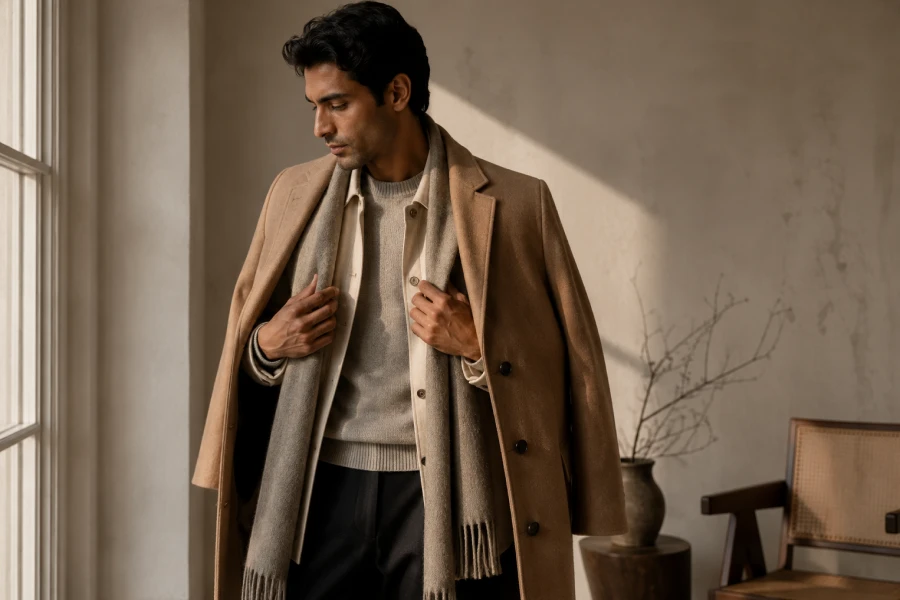
The secret to staying warm is not simply adding another sweater. How to layer clothes for winter begins with giving every layer a function, a proportion, and enough room to move. A thin base can regulate comfort. A knit or overshirt can create warmth and texture. A coat can provide protection while establishing the final shape. When those pieces work together, the outfit still looks clear rather than crowded. This is especially important on days that move between outdoor cold and overheated rooms. You want layers you can remove without losing the whole look. A little planning creates more ease, more flexibility, and far more style than piling on clothing at the last minute.
The first layer should be the quietest one in the outfit. It needs to sit smoothly, feel breathable, and avoid creating extra bulk beneath everything else. Fine merino, soft cotton blends, and lightweight thermal fabrics are useful choices because they add comfort without dominating the silhouette. Begin with colors that already work across your wardrobe. This makes the base easy to reveal if you remove a cardigan or jacket indoors. A group of cozy everyday outfits can show how a good first layer supports more than one mood. Once the foundation feels right, you can add texture and shape with much less effort.
Layering looks best when the textures do not all say the same thing. A smooth fitted top beside a ribbed knit creates depth. A crisp overshirt beneath a soft coat adds structure. One piece can be relaxed, while another offers a cleaner line. This contrast prevents the outfit from becoming shapeless. Think in terms of weight as well as fabric. A heavyweight sweater may only need a thin shirt beneath it. A lighter knit can take a fuller jacket. Keep one layer visually simple so the other layers have room to register. That kind of editing makes warmth look like a choice. It also makes the whole outfit more comfortable to wear.
Practical styling starts with the day you are actually about to have. A long commute, a casual lunch, and an afternoon indoors all ask different things from an outfit. Consider footwear, bag weight, and the possibility of taking off a layer. A dependable winter boot styling approach can anchor the rest of the look because shoes set the pace for movement and proportion. Choose boots that work with the length of your trousers or skirt. Make sure socks and tights support the same level of warmth. When the base of the outfit is practical, the remaining layers feel much easier to arrange. Real-life usefulness always improves the final result.
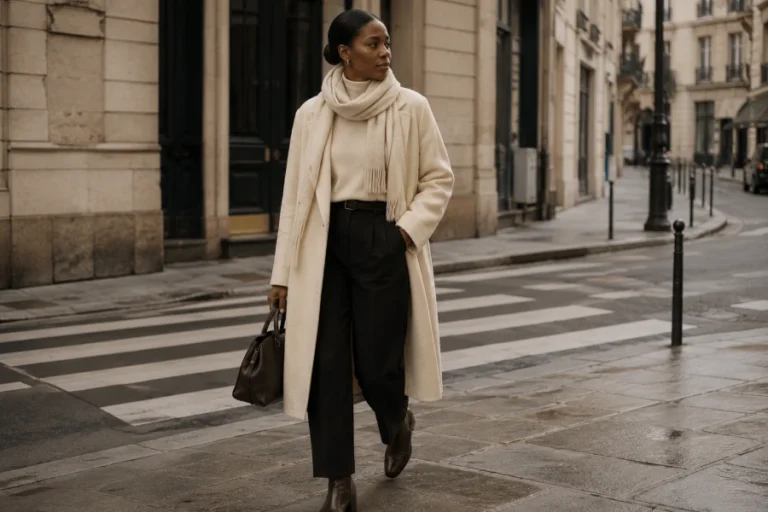
Warm clothing has more volume by nature, which makes proportion especially important. Try a close-fitting top with relaxed trousers, or a cropped layer over a longer base. A belt can provide definition when an oversized knit begins to feel too loose. A long coat can bring a clean line over a textured middle layer. The point is not to make every part of the body look narrow. It is to give the outfit a visible rhythm. Look for one area of structure, one area of softness, and one clean finishing detail. That balance makes a layered look feel more like an outfit and less like an emergency response to cold weather.
Texture is often what gives winter outfits their appeal. Brushed wool, quilted fabric, soft leather, and ribbed knits make a neutral palette feel rich. Use texture-rich winter looks when you want variety without relying on extra color or accessories. Let one material lead the conversation, then use the others in smaller doses. A suede boot may echo a leather belt. A ribbed sweater can add movement beneath a smoother coat. Too many chunky textures can make an outfit feel dense, so leave space for simpler surfaces. The goal is warmth with contrast. When materials feel intentional, even familiar pieces look new.
Before you commit to a layered outfit, do a brief movement test. Sit down, lift your arms, walk across the room, and see whether the pieces bunch or pull. Remove one layer when the outfit feels too thick. Replace it with a thinner fabric or a more structured piece. A few warm outfit layering techniques make this kind of editing much simpler. Keep your bag, outerwear, and shoes nearby when you test the full look. That is how you see the actual proportion. The best winter outfit supports your day from morning through evening. It should keep you warm without making ordinary movement feel difficult.

Leave a comment